1884
Against the Grain (À rebours)
Joris-Karl Huysmans
Decadent. France. Written in French.
Huysmans's novel (À rebours) follows Jean des Esseintes, the last of a worn-out aristocratic line, who shuts himself in a house at Fontenay and arranges his days around perfumes, jewels, Latin decadent authors, Moreau's paintings and Baudelaire's poems. Its library chapters on Petronius, Baudelaire, Poe, Flaubert and Mallarmé became a reading list for the Decadent movement.
Where it came from
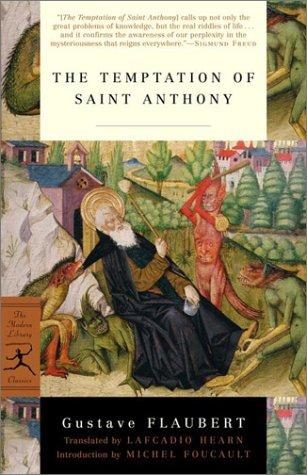
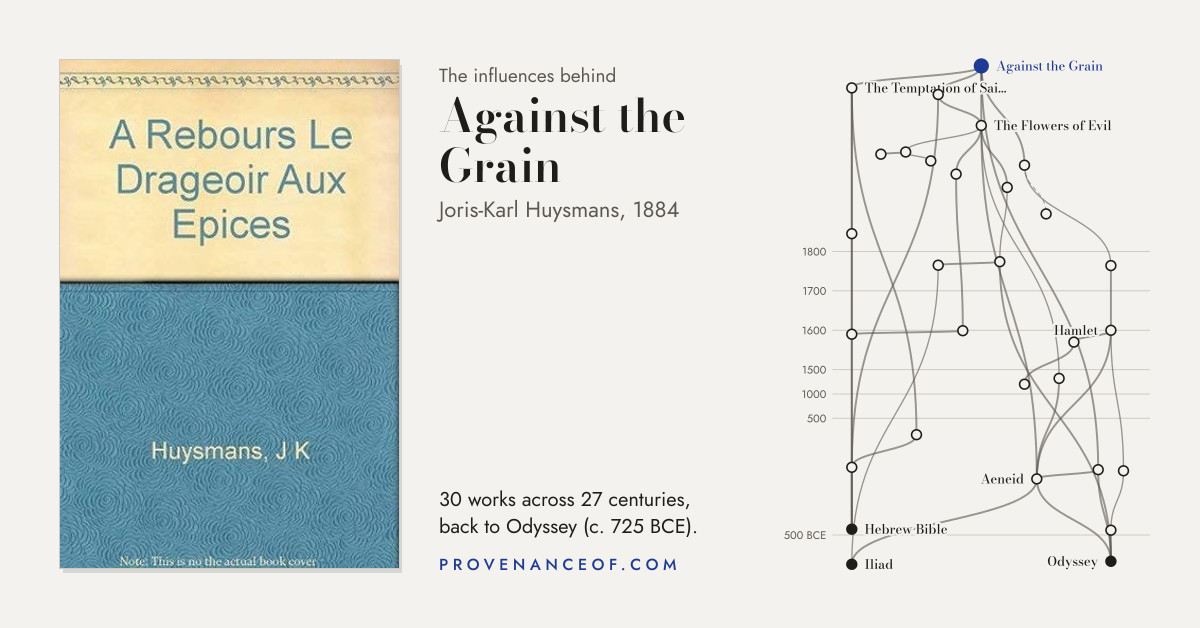
- The Temptation of Saint Anthony (La Tentation de saint Antoine), Gustave Flaubert 1874 follow this thread
- Hérodiade (Scène), Stéphane Mallarmé 1871 follow this thread
- The Flowers of Evil (Les Fleurs du mal), Charles Baudelaire 1857 follow this thread
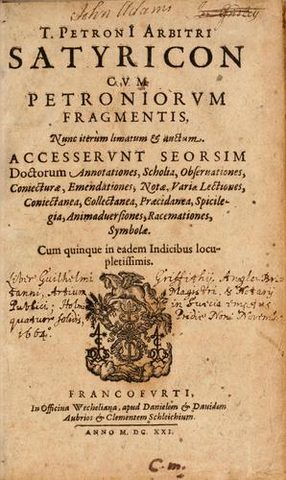
- Satyricon, Petronius c. 60 CE follow this thread
- The Fall of the House of Usher, Edgar Allan Poe 1839 follow this thread