Provenance Of

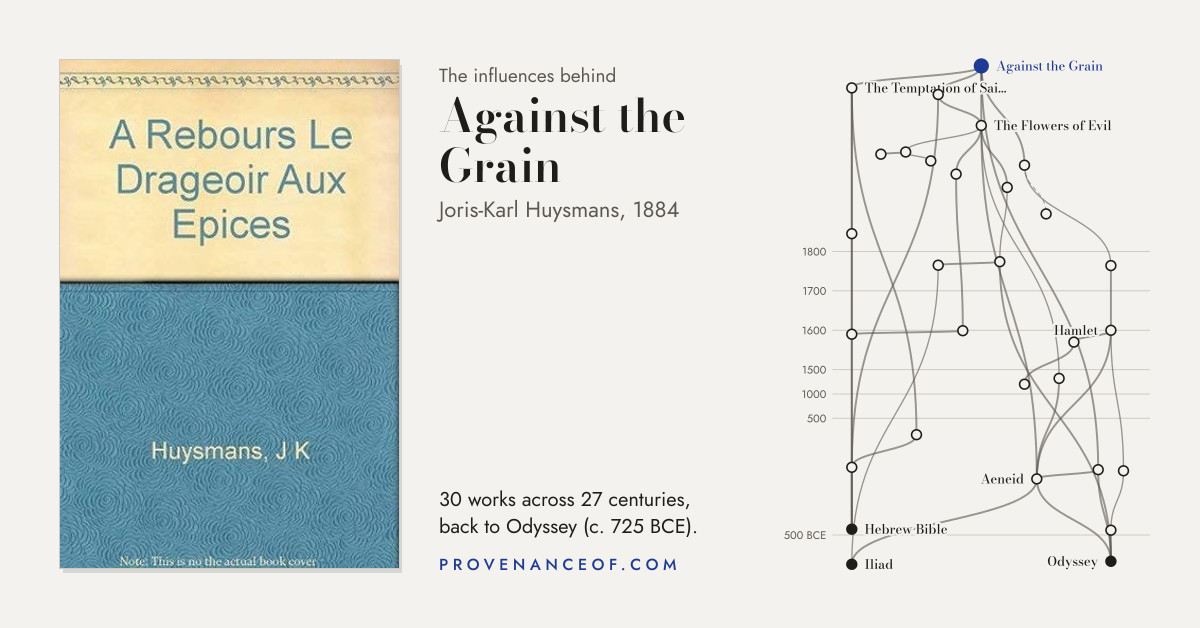
The influences behind Against the Grain (À rebours)

30 works across 27 centuries, back to Odyssey and Hebrew Bible (Tanakh).

Following one thread, 4 works from Against the Grain (À rebours) to Odyssey. Back to all 30 works

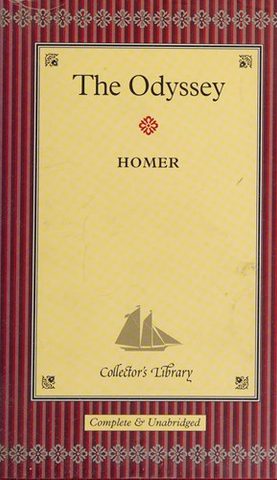
  1. Cover of Odyssey

    c. 725 BCE

    Odyssey

    Homer

    Archaic. Archaic Greece. Written in Ancient Greek.

    Epic of Odysseus's ten-year voyage home from Troy, pursued by the anger of Poseidon.

    What it handed down

    To The Sorrows of Young Werther

    Direct source, well documented.

    Werther carries his Homer everywhere and reads the Odyssey in the village, picturing the patriarchal simplicity of its world. His shift from Homer to Ossian charts his descent into despair.

    To Satyricon

    Structural model, well documented.

    The narrator Encolpius is pursued by the wrath of Priapus as Odysseus was by Poseidon's, a parody frame scholars widely accept. The book also stages Homeric scenes in sordid modern settings.

    To Aeneid (19 BCE)

    Structural model, well documented.

    The first six books follow the Odyssey: a hero's wanderings, a storm, a banquet narrative of past sufferings, and a descent to the underworld. Virgil also revisits Homeric episodes such as the Cyclops' island.

    To Agamemnon

    Direct source, well documented.

    The Odyssey repeatedly tells of Agamemnon's murder on his homecoming by Aegisthus and Clytemnestra, as a foil to Odysseus. Aeschylus builds his tragedy on this Homeric story.

    Where it came from

    This is one of the oldest surviving works in its tradition; the line ends here.

    Find “Odyssey” on Amazon

Share this

Preview card: the tree of influence behind Against the Grain (À rebours)