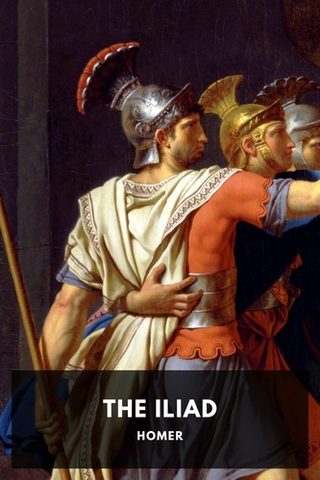
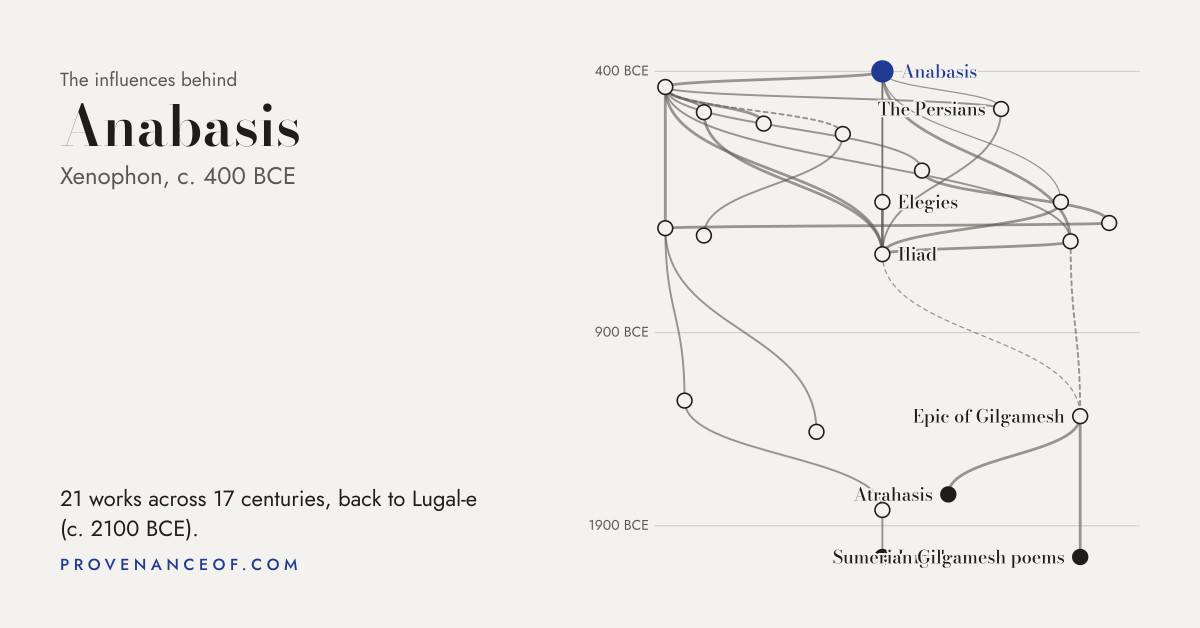
Hexameter epic of the wrath of Achilles in the tenth year of the Trojan War, built on assemblies, speeches and battles.
What it handed down
Thematic kinship, probable.
Xenophon's rise in Book 3, a sleepless night, a dream, then rousing the leaderless captains and speaking to the assembled army, is modeled on Iliadic assembly scenes and on Nestor's and Odysseus' rallying speeches. Scholars read the generals' debates and Xenophon's self-portrait as a young leader against the Iliad's councils.
To Histories
Structural model, well documented.
Herodotus frames the Persian Wars as a successor to the Trojan War, opening with abductions that culminate in Helen, and discusses the Iliad directly at 2.116–117. His speeches, catalogue of Xerxes' army and battle narratives follow Homeric models, which is why ancient critics called him 'most Homeric'.
To The Persians
Structural model, probable.
The play's chanted catalogues of Persian commanders and contingents imitate the Iliad's Catalogue of Ships. The messenger's battle narrative uses Homeric diction for the fighting at Salamis.
To Plataea Elegy
Direct source, well documented.
The Plataea elegy opens with a hymn to Achilles and compares the fallen at Plataea to the heroes of Troy. Simonides presents the recent battle as a new Iliad, with Homer's fame as the model for the Greeks' fame.
To Elegies (Eunomia and martial exhortations)
Direct source, well documented.
Tyrtaeus fragment 10 adapts Priam's speech at Iliad 22.71–76 on the shame of an old man lying dead in the front line while the young look on. His elegies are written in Homeric vocabulary recast for the hoplite phalanx.
To Poems (fragments)
Stylistic influence, well documented.
Archilochus writes in Homeric diction while overturning Homeric values: his poem on abandoning his shield to a Thracian answers the Iliadic ideal of the warrior who dies rather than flees. He calls himself 'servant of Lord Enyalios', using the Iliad's name for Ares.
Structural model, well documented.
The Odyssey assumes the Iliad's story and characters and is composed in the same hexameter diction. Its nostos takes up the aftermath of the war, and Odysseus' visit to the underworld reunites him with Achilles and Ajax.