Anabasis
c. 400 BCE
Anabasis
Xenophon
Late Classical Greece. Classical Greece (written in exile at Scillus/Corinth). Written in Ancient Greek.
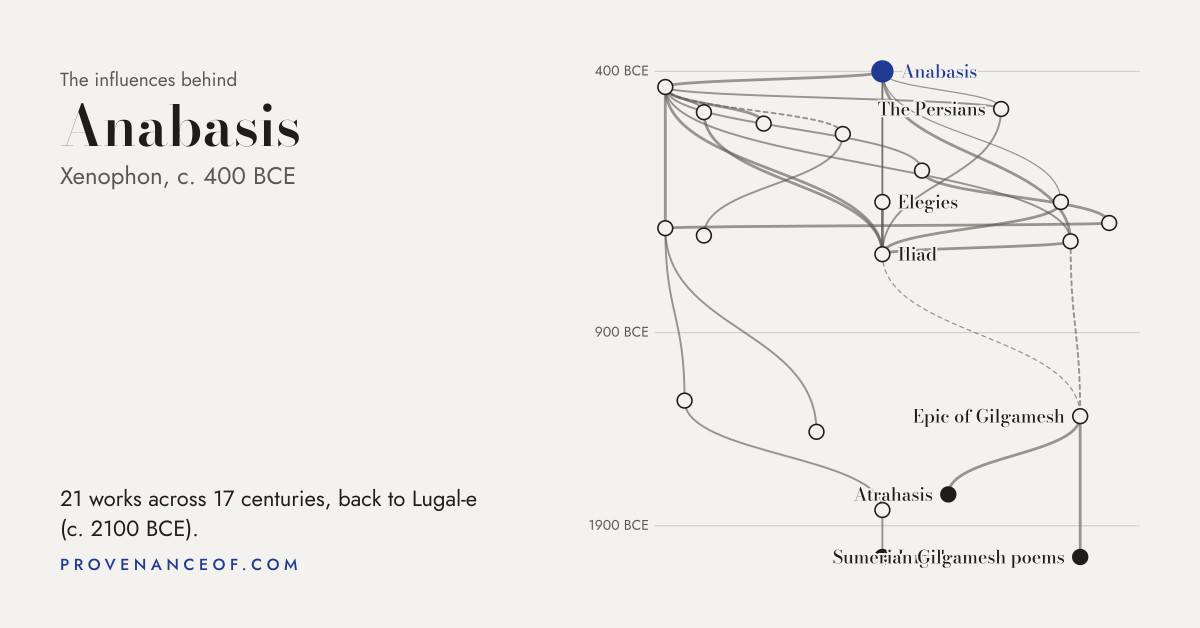
Xenophon's Anabasis, written probably in the 370s BCE, is a first-person account (told in the third person) of the march of Cyrus the Younger's Greek mercenaries into Mesopotamia in 401 BCE and of their retreat to the Black Sea after Cunaxa. Its tree runs back through Herodotus, Thucydides and Ctesias to Homer, and through Herodotus' Persian and archaic Greek sources to Mesopotamian and Anatolian texts.
Where it came from
- Odyssey, Homer c. 725 BCE follow this thread
- Histories, Herodotus c. 430 BCE follow this thread
- Iliad, Homer c. 750 BCE follow this thread
- The Persians, Aeschylus 472 BCE follow this thread
- Elegies (Eunomia and martial exhortations), Tyrtaeus c. 650 BCE follow this thread
- Poems (fragments), Archilochus c. 650 BCE follow this thread